Which shrimp species are suitable for beginners?

Choosing your first aquarium shrimp can feel difficult. There are hundreds of color variations and many different species on the market. Some shrimp are very hardy and forgiving, while others require great experience and careful control of water values.
For those new to the shrimp hobby, the choice is simple: start with Neocaridina.
Why Neocaridina is best for beginners
Neocaridina is the most popular group of freshwater shrimp in the world, and there are several reasons for that.
They are:
• Durable
• Easy to care for
• Customizable
• Proliferates easily
• Available in many colors
• Thrives in regular tap water in many places
They can also cope with smaller variations in water values than many other shrimp species.
This makes them perfect for those who want to learn the basics before moving on to more advanced species.
Popular Neocaridina for beginners
Said Sakura
Red Sakura is one of the most common beginner shrimp.
The bright red color is clearly visible in the aquarium and the shrimp is very hardy. For many, this is the first shrimp they buy.
Bloody Mary
Bloody Mary is a deeper and darker red variety.
Under the right lighting, the body can appear almost translucent ruby red. It is as easy to care for as other Neocaridina and is perfect for beginners.
Blue Dream
Blue Dream is one of the most popular blue shrimp.
The intense blue color makes it stand out against green plants and dark background.
Yellow
Yellow shrimp provide a lovely contrast in the aquarium.
The strong yellow color is clearly visible even in dense vegetation and makes the aquarium more alive.
Orange Sakura
Orange Sakura combines the hardiness of Neocaridina with a color that really catches the eye.
It fits particularly well in plant aquariums.
What water values does Neocaridina need?
One reason Neocaridina is recommended for beginners is that they accept a wide range of water values.
Generally works:
Temperature: 18-28 °C
pH: 6.5–8.0
GH: 4–8 p.m
KH: 2–12
TDS: 150-400
The most important thing is not to hit an exact value, but to keep the values stable over time.
Shrimp that beginners should wait for
When searching the internet, it's easy to be tempted by unusual and exclusive shrimp.
However, some species are significantly more sensitive.
Examples are:
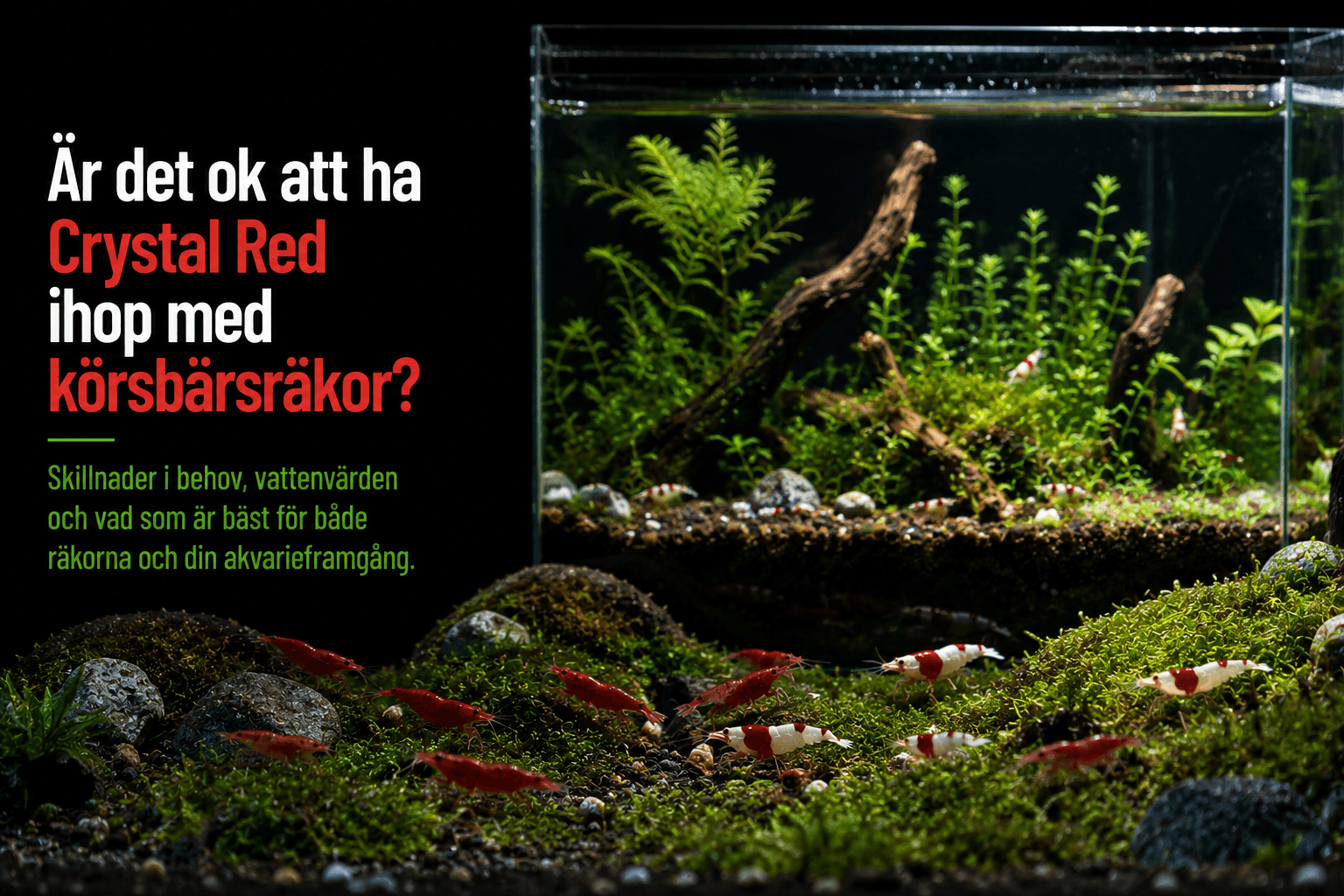
• Crystal Red Shrimp (CRS)
• Crystal Black Shrimp (CBS)
• Blue Bolt
• Panda
• King Kong
• Fancy Tiger
These usually belong to the group Caridina and usually require softer water, lower KH and more stable conditions.
Many experienced growers also use RO water and special minerals to keep them optimal.
That doesn't mean they're impossible to hold, but they're rarely the best starting point.
Should you mix different colors?
Many beginners want to buy several different colors at the same time.
It works, but there is a downside.
Most Neocaridina colors belong to the same species and can mate with each other.
After a few generations, the colors begin to mix and the colony often reverts to more natural, brownish colors.
If the goal is to maintain a strong color, it is therefore recommended to keep one color variant per aquarium.
How many shrimp to start with?
A common beginner's mistake is buying too few shrimp.
Shrimp feel safer in groups and it is also easier to build a stable colony.
For most aquariums we recommend:
• At least 10 prawns
• Preferably 20 if the aquarium allows
Then you get faster natural reproduction and a more active aquarium.
Our recommendation
If you are buying your very first shrimp, we recommend one of the following:
Bloody Mary
Said Sakura
Blue Diamond
Yellow
Orange Sakura
All are hardy, beautiful and great for learning the basics of the shrimp hobby.
Once you've managed to get your first colony to reproduce, you've gained the most important experience needed to later try more advanced species.
In the next article, we will go through the difference between Neocaridina and Caridina and help you understand which group is best for your particular aquarium.